
This is the fourteenth installment in our Days of Wine and Music series. We, once again, return to that Sammarinese winery upon which we have been focusing and report on a very special offering, indeed.
Fortuity
We just happened to be doing some recreational reading on the very day we tasted this wonderful wine. We were perusing an article entitled “How Excessive Government Killed Ancient Rome”1 (Okay, so our idea of a good time is slightly offbeat. So what?) in which, among other things, the author relates how a succession of Roman emperors debased the empire’s currency. The following list is compiled from that article. Rome’s silver coin was known as the denarius. Nero (A.D. 54-68) lowered the silver content to 90%, setting off a race to the bottom.
- Marcus Aurelius (A.D. 161-180): silver down to 75%.
- Septimius Severus (A.D. 193-211): silver drops to 50%.
- Claudius II Gothicus (A.D. 268-270): silver content plunges to .02%. Ouch! Anybody have any bottle caps?
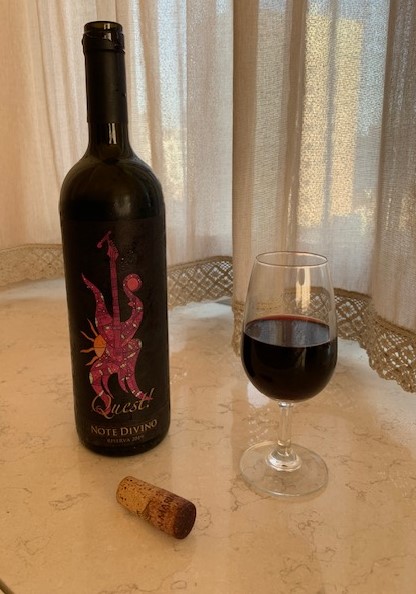
Well, what does all this have to do with a wine review, anyway? Plenty. In these days when so many pols and pundits worship at the altar of inflation, and debasement is the name of the game, it is heartening to have something that might become better with age. And that something could be Note Divino Riserva 2019.
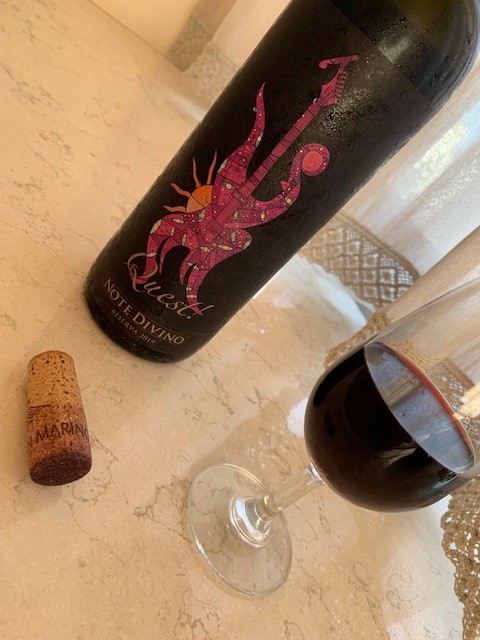
Note Divino Riserva is a Bordeaux-style blend: 50% Merlot, 30% Cabernet Sauvignon, and 20% Cabernet Franc. The nose is redolent of black cherry, cassis, violets, black pepper, and a hint of strawberry. It is off dry with medium (+) acidity and cassis, black cherry, and hints of vanilla on the palate. The abv is 14%, and the finish is medium (+). The tannins are medium (+), and the aromas and flavors are of significant intensity to assume that this wine will develop in bottle and acquire tertiary notes. In other words, it will get better with age, not worse, like the Roman denarius.
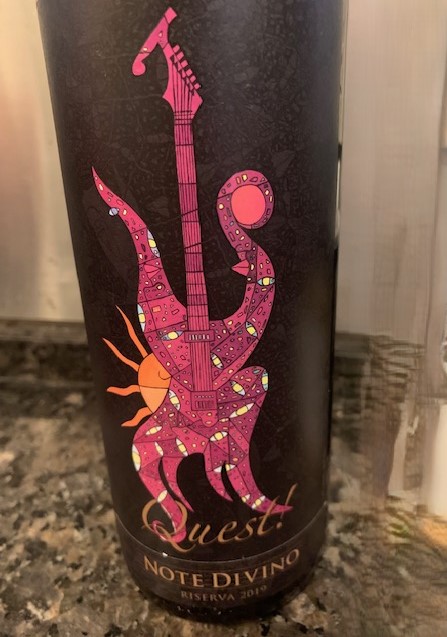
As usual, the bottle aesthetics are impressive. Run your finger over the guitar strings featured on the label, and you will feel them!
1Bartlett, B. “How Excessive Government Killed Ancient Rome,” Cato Journal, Vol. 14, No. 2 (Fall 1994).

 Drinking Japan