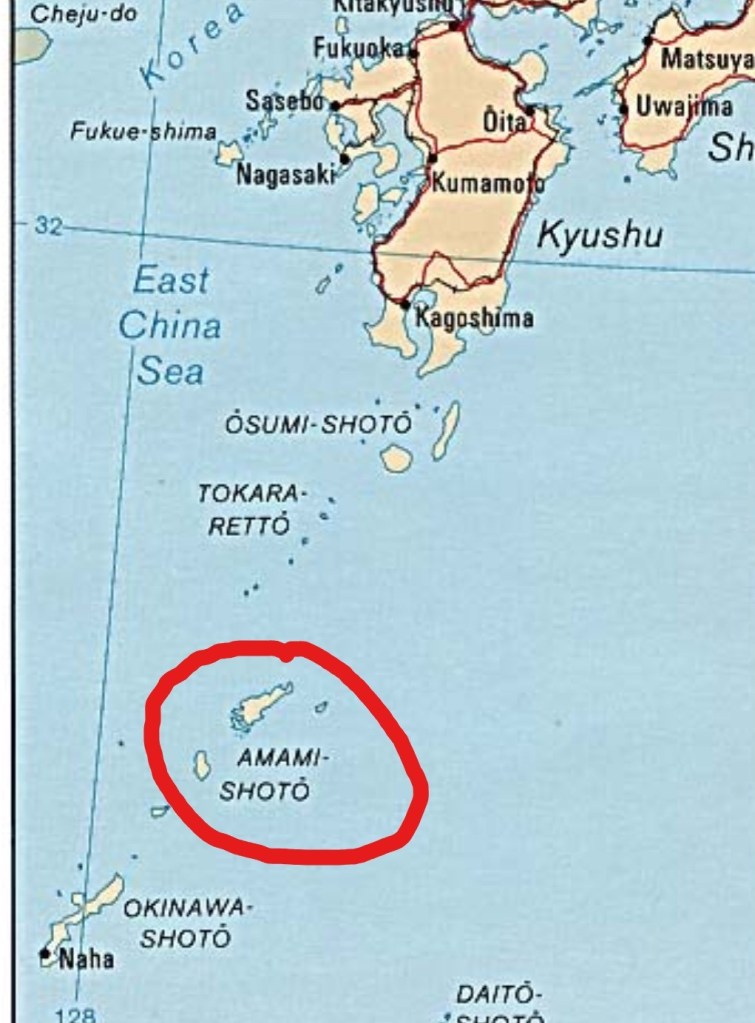
A number of years ago we paid a visit to Amami-Oshima, the largest island in the Amami archipelago, which is located between Kyushu and Okinawa. The area is now a UNESCO World Heritage Site and noteworthy for its flora and fauna. Included among the latter are some pretty rare creatures, such as the Amami Rabbit——this rascally rabbit is also found on the neighboring island of Tokunoshima, though—the Irimote Cat, whose sole domicile is Irimote Island, and the Ryukyu Long-haired Rat; we run into a few of those from time to time, but they are of the two-legged variety and not confined to that location.
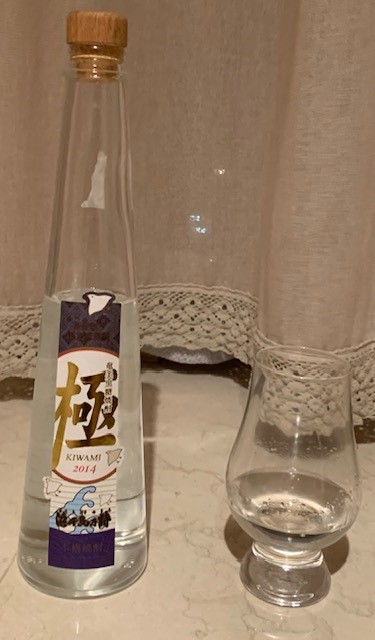
Aside from the aforementioned critters, the Amami Islands are the sole source of Kokuto Shochu, or Brown Sugar Shochu. It is better not to think rum here. The sensory appeal is completely different. We tasted Hamachidorinouta Kiwami 2014, which Toji Yasuhara Junichiro states is made from 100% Amami brown sugar and well water.
Hamachidorinouta Kiwami is clear shochu with a 44% abv. The nose is complex, with plenty of sugar and some coconut, as well. The palate has a similar profile but without the coconut. The mouthfeel is silky. We first drank it straight and then on the rocks. Our advice is to have it straight. The toji recommends putting it in the freezer. It won’t freeze, of course, because the alcohol is too high. He doesn’t say what to expect with freezer exposure, but it sounds good to us. We’ll have to try it eventually.
Hamachidorinouta Kiwami is made by Amami Oshima Shuzo. The link is here: http://www.jougo.co.jp/
For those readers interested in learning more about the history of sugarcane and Amami-Oshima, a recently published book should prove quite informative: Entire of Itself?: Towards an Environmental History of Islands (White Horse Press, 2024). Chapter 7 is entitled “Amami and Amami: Confecting Sugar Islands in the East China Sea,” by Thomas Monaghan.

 Drinking Japan