Have you seen the videos comparing US and foreign versions of various food products? Common products that are often compared are cereals and sodas, where the US versions often have synthetic petroleum-based dyes, while foreign versions do not. The US versions are vibrantly colored, while the foreign versions have more subdued hues.
Due to health concerns, the US Food and Drug Administration (FDA) is working with food companies to phase out those dyes that give US food such vibrant colors.
Amongst the dyes that the FDA would like to see removed from food products by the end of next year are FD&C Blue No. 1 and FD&C Red No. 40.
When I visited a local supermarket in Japan, I was relieved to find that most products here contained natural dyes like cochineal extract, carotenes, etc. rather than synthetic dyes.
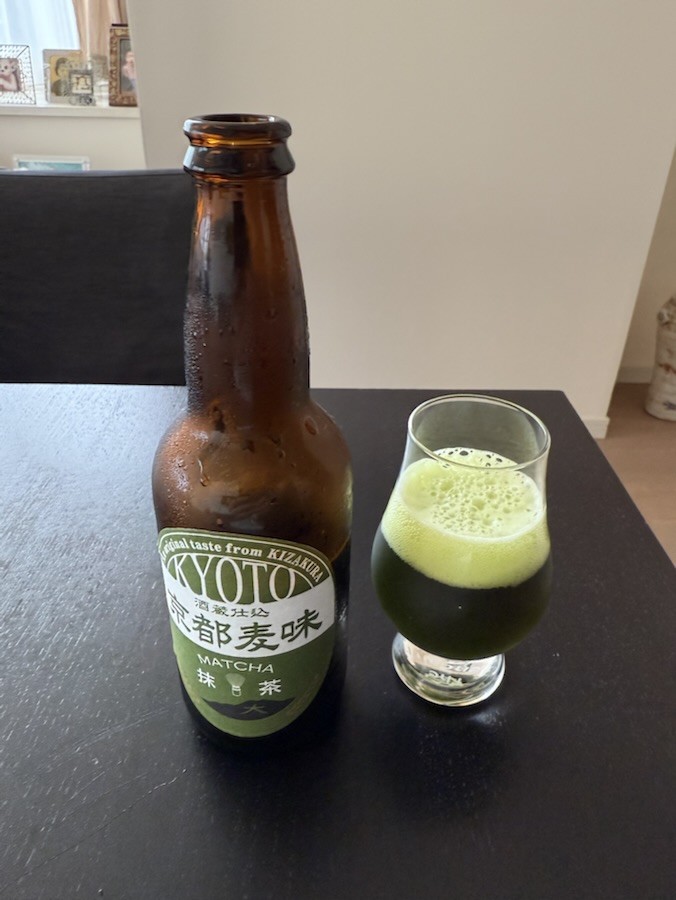
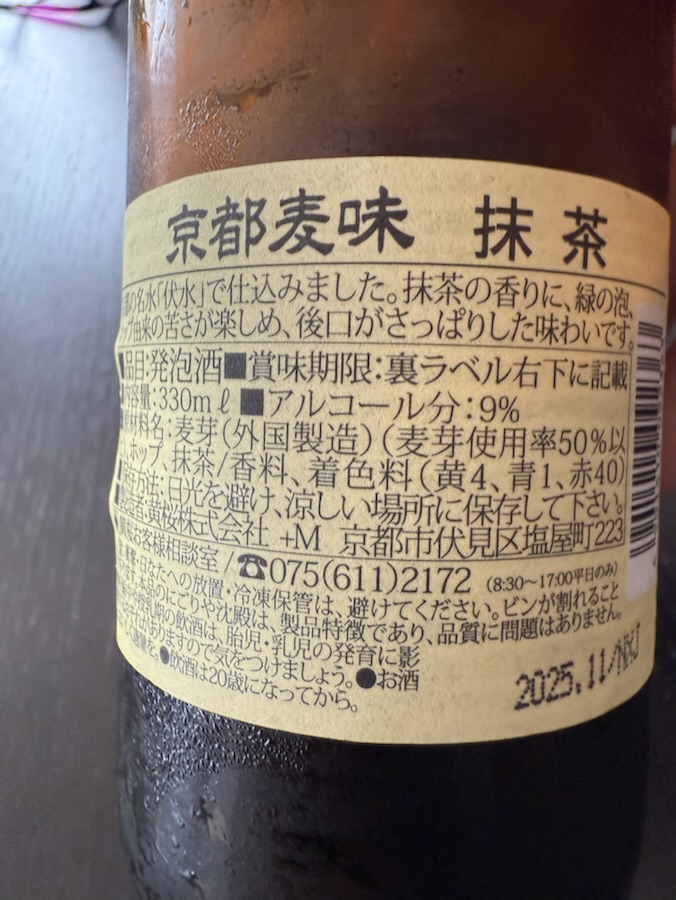
So, it came as a big surprise to find that Kizakura’s Kyoto Mugiaji Matcha contains the two synthetic dyes listed above that are being targeted by the FDA for elimination plus another one. The back label states that it contains Yellow 4, Blue 1 and Red 40.
Red 40 has potential side effects including: hyperactivity, irritability, migraines, hives and asthma. According to the Cleveland Clinic, Red 40 contains benzene, which is a known carcinogen. Please see here.
Blue 1 is also believed to affect behavior and attention spans, as well as cause allergic reactions. Please see here.
So, what do all these colors contribute to this matcha flavored beer? Do they make it more appetizing?
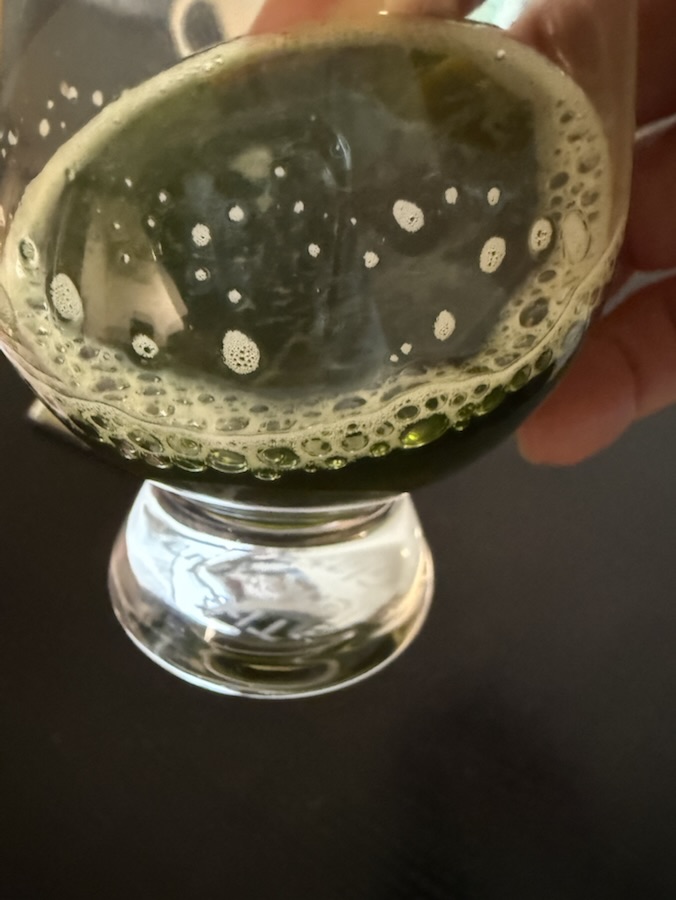
Not really. The color is, to say the least, a bit disconcerting, as even the head is overly green. The flavor is a bit better — there is clearly a taste of green tea coming from the matcha.
Kizakura is a well-known sake brewery from the Fushimi district of Kyoto. Incorporating iconic Japanese ingredients is a good idea, but they should do it without the use of artificial dyes.

 Drinking Japan