
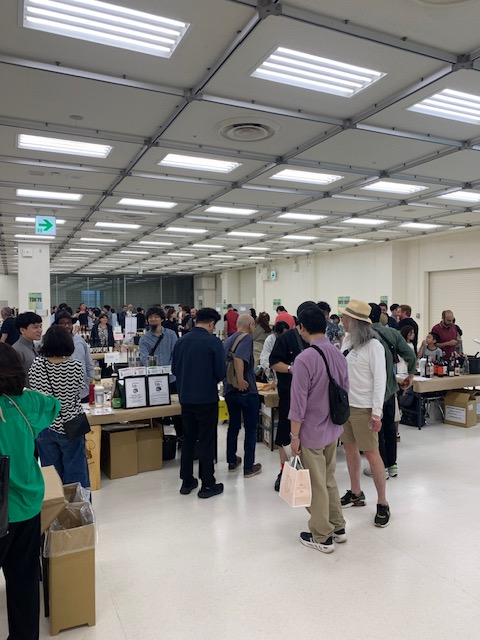
Some of our readers might not be familiar with the term “raw wine,” so we will endeavor to provide a concise explanation for a concept that requires book-length coverage, which is exactly what Isabelle Legeron, the driving force behind the Raw Wine events, provides in her seminal work Natural Wine: an introduction to organic and biodynamic wines made naturally (London: Cico Books, 2014). As any marketer will tell you, naming is extremely important. (If you have any doubts about that, check out “Chinese gooseberry.”) There are quite a few names for raw, or natural, wine. Ms. Legeron acknowledges the plethora of potential competing terms for “natural wine”: “…perhaps a less contentious term, such as ‘live,’ ‘pure,’ ‘raw,’ ‘real,’ ‘true,’ ‘low-intervention,’ ‘authentic,’ ‘farmhouse,’…, would be less provocative. …For whatever reason, people … have chosen to use the term ‘natural’….” Perhaps after a few more of these Raw Wine events, which are being held in various cities, raw will be the undisputed winner of the adjectival wars, and all wine lovers will immediately recognize the term raw wine.
We are not frequent drinkers of this type of wine, but we do share certain things in common with its proponents. One is an intense distrust of and dislike for GMOs, or anything lobbed from a lab, for that matter. (Readers might want to have a look at “GM Crops and the Jevons Paradox: Induced Innovation, Systemic Effects and Net Pesticide Increases From Pesticide-Decreasing Crops,” by Flachs, et al., appearing in Journal of Agrarian Change [2025]. And, yes, you read that subtitle correctly!) This little aside furnishes us with a handy segue into commonality number two: we favor the use of natural herbicides and pesticides, not the chemical variety.
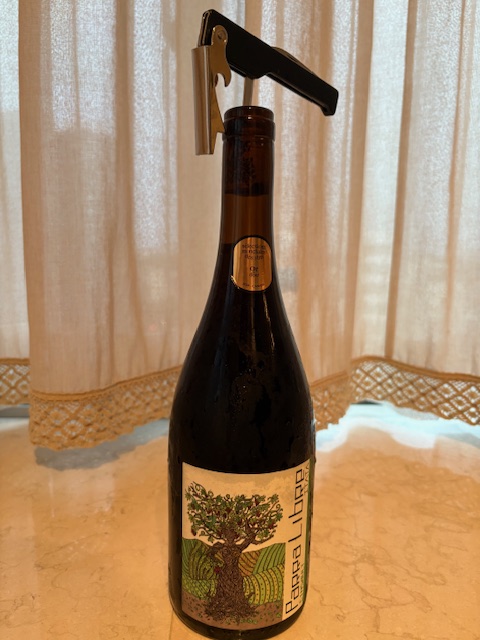
We attended RAW WINE TOKYO 2025 on May 11, the second day of the two-day event. PR Times gives the number of participants as 2,000. We had the opportunity to talk with some of the vintners present and were impressed with their sincerity, dedication, and zeal. In late afternoon we encountered Parra Libre Cinsault, a product of Chodin Param Wines, located in Chile’s Itata. Before we realized that it had won a gold medal from Selections Mondiales des Vins, we both said something like “Wow, this is [fill in whatever positive descriptor comes to mind].”
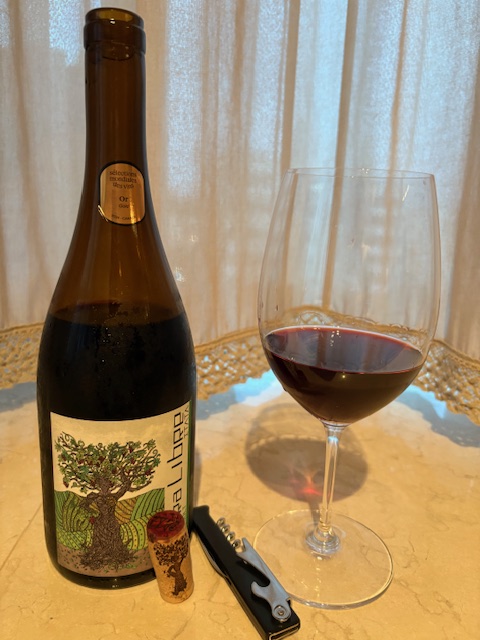
Sensory Evaluation: This is 100% Cinsault, a grape variety closely identified with France’s Languedoc. The quality of the wine it produces can, to a large extent, vary depending on whether yields are controlled. If so, the wine can age rather well, and the experience of drinking it can be noteworthy, as it clearly is here. Parra Libre Cinsault’s grapes are sourced from 100-year old vines. It is a ruby-colored wine with aromas of red fruit, especially cherries and strawberries, and a hint of spice. There is cherry on the palate with medium + tannins and a medium + finish. The ABV is 15%.
Link: www.chodinparamwines.com

 Drinking Japan