Encountered at JFEX, July 2025.
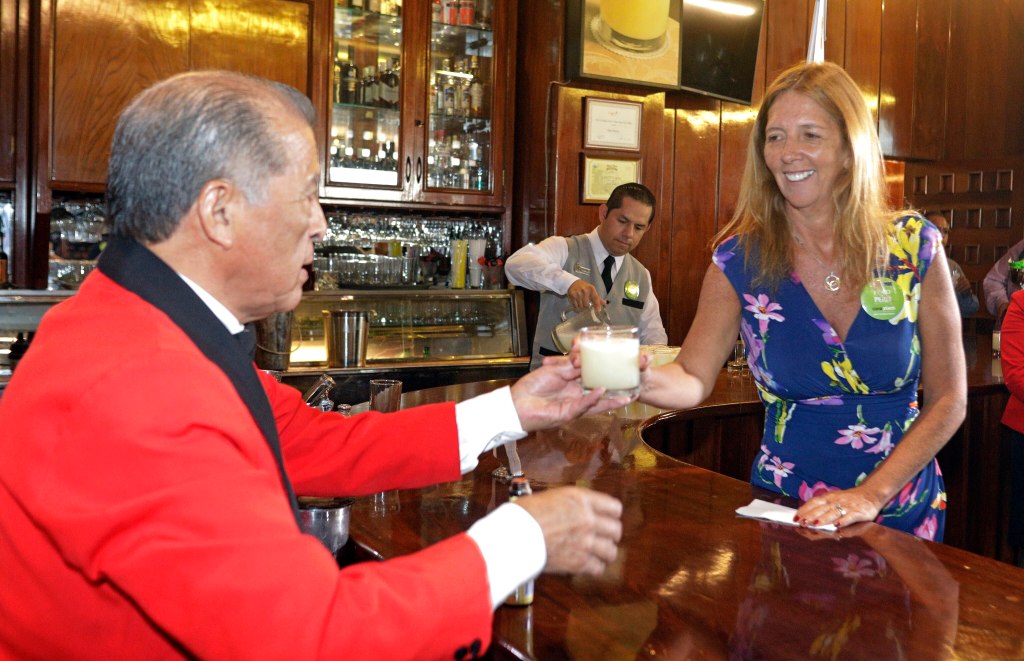
There was an Expo in Japan recently. In a newspaper article entitled “Expo Offers Opportunity to Drink Alcoholic Beverages from Around the World,” appearing in The Japan News on June 10, 2025, a visitor makes the following comment after having drunk a Pisco Sour, “…they [the alcoholic drinks he presumably consumed at the Expo] aren’t things I can experience in Japan….” Well, it is not surprising that he was impressed with this cocktail, but as for not being available in Japan, that’s another matter. True, it is not something that one can expect to find at an izakaya or a working stiff’s bar, but the enthusiastic attendee at Expo Osaka can rest assured that there are many places in Japan for him to sip Pisco Sours. Most, if not all, hotel bars should have the wherewithal to give him what he wants.
Pisco is a distilled beverage made from fermented grape juice and is closely identified with Peru and Chile. Devotees of the drink who favor Peru might be inclined to celebrate their beverage on February 8, which in 2003 was declared “Pisco Sour Day” and appropriately feted with the consumption of a few Pisco Sours, logically enough. For those who lean in the Chilean direction, the Piscola—that’s Pisco and Coke—would be a better choice on that day.
It has been my experience that distilled beverages can be rather enjoyable in a range of prices, from the most economical—bare-bones versions, so to speak—to the pricey, well-aged varieties. The skill of the distiller, the quality of, in this case, the grapes, and the aging process can have a highly significant impact on the final product, with the top-of-the line being rich and complex. The reasonably priced beverages can serve well in cocktails, whereas those with complexity are best drunk straight.
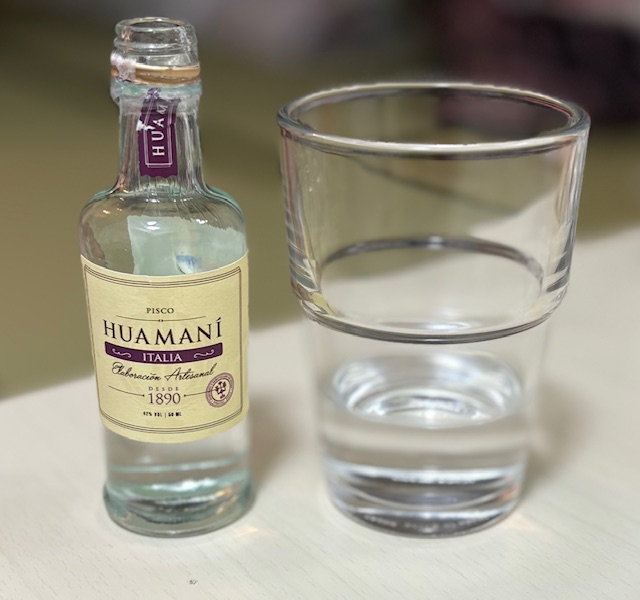
Our anonymous visitor to Expo might also be happy to know about Imperio and their Peruvian products. They are the purveyors of artisanal Pisco Brandies produced by Huamaní, a distillery founded in 1890. The company uses hand-picked grapes and pot distillation. Furthermore, Imperio has a restaurant in Chiyoda Ward, Tokyo. The name is Yuyay, and the link appears below. If you are unfamiliar with Peruvian cuisine, it is excellent, so you might want to think about paying them a visit.
The following is a sensory evaluation of some of their brandies. As they are all clear and 42% ABV, only aroma and flavor characteristics will be given, and, if relevant, tactile information. I tasted all of them straight.
“Italia”: Strong floral notes on the nose and sweet, like the fragrance of a mountain lily. Also, initially sweet on the palate yielding ever-so slowly to a slight bitterness. The mouthfeel has an element of creaminess to it.
“Quebranta”: A much lighter nose than the former. Some evidence of tropical fruit, banana and a hint of pineapple. The mouthfeel is lighter too. There is initial sweetness on the palate. It lingers long.
“Acholado”: According to the tasting notes, which I always read after I conduct my assessment, this is supposed to have sensory characteristics that combine those of the other varieties. I concur, but I picked up on a hint of peach on the nose. Very interesting.
“Torontel”: Cotton candy on the nose. Some cherries on the palate. Smooth.
Link: www.imperiojapan.com
Link: http://www.yuyay.tokyo

 Drinking Japan