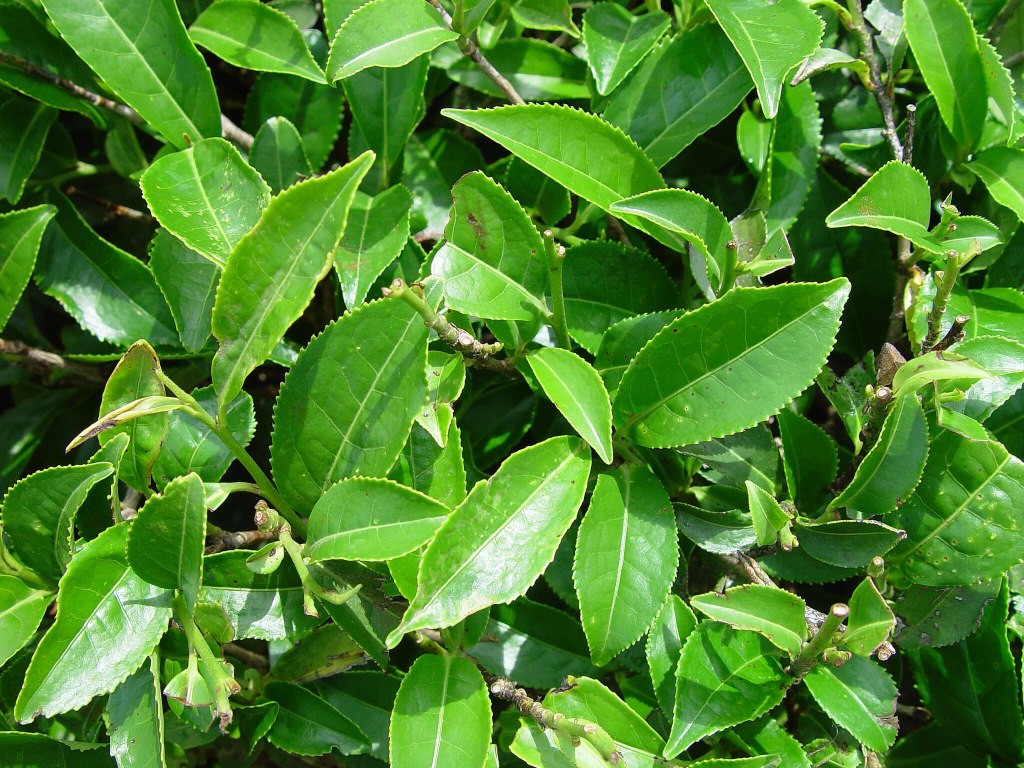
There are, of course, many kinds of tea, but when most people hear the word tea, they think of what is derived from the shrub Camellia sinensis, the leaves of which can be processed in different ways to produce a plethora of styles. A major factor here is the degree of fermentation (a.k.a., oxidation) to which the leaves are exposed. In the case of green tea, a heat treatment, known as “fixation,” is used to prevent oxidation. This differs from how black tea and oolong tea are processed. The former is exposed to a high degree of oxidation, and the latter is midway between black tea and green in this respect, semi-oxidized.
Camellia sinensis’ provenance is China. So, how did it wind up being grown in places like Japan and India? Well, there are various theories as to how Japan acquired it, but it is clear that the Japanese obtained it fair and square. In the latter case, Robert Fortune (1812-1880) played a role. “In his 1852 book Fortune’s Journey to the Tea Countries of China, botanist and tea historian Robert Fortune recalled the East India Company…sending him on an undercover journey to China.”1 He, sometimes disguised as a native, acquired a large number of seedlings and smuggled them out of the country. One wonders how the authorities can prevent such industrial espionage. “Are you wearing a disguise, citizen?” No, that wouldn’t work, would it?
1Silver, C., “The Victorian Tea ‘Infomercial,’” The Daily JSTOR.org, July 8, 2020.

 Drinking Japan