There are several definitions for the term white heat. Two are relevant here.
- The state or temperature at which matter emits white light.
- A state of intensive activity. [Wiktionary]
Heated sake is a pleasure to consume, all year round, of course, but especially on those stygian winter nights. To some people, preparing this drink is simple. Pour some sake into a cup; put it into the microwave, and “ding,” take it out. Then, drink it up, of course. Those in search of immediate warmth might focus on the temperature. Others, however, might notice that the heating has positively impacted the flavor of the sake, enhancing the perception of sweetness.
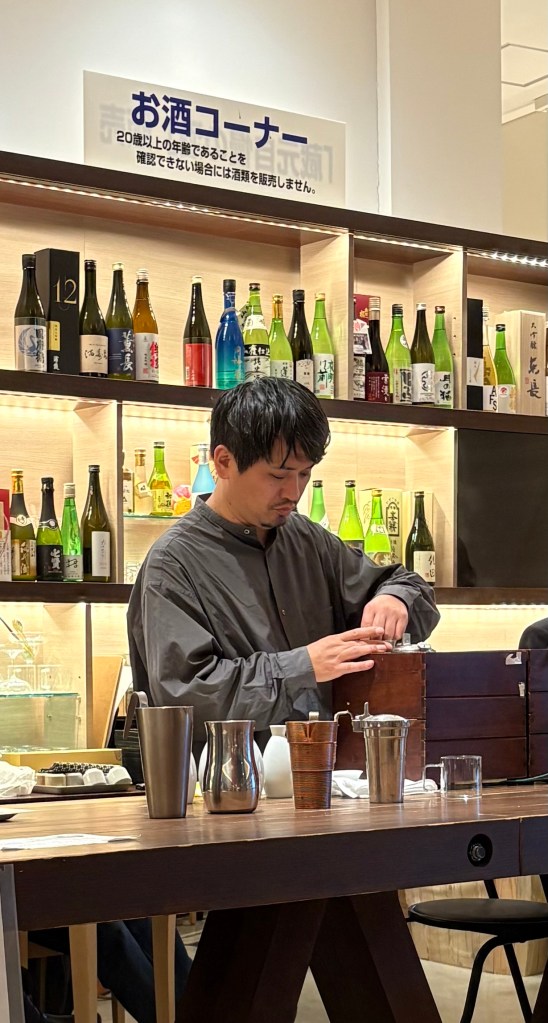
The JSS (officially, the Japan Sake and Shochu Makers Association) event was held on November 12, 2025, and featured Joe Takasaki of Takasaki no Okan. His approach to sake heating bears no relation to definition number one of white heat, but does seem very much like what is described by definition number two. Takasaki-san is not a maestro of the microwave. He carefully chooses from among a number of vessels of various sizes and compositions for heating, monitors the process, and selects the most appropriate cup for the beverage. A list of the vessels he employed that night appears below.
- Beaker | ビーカー
- Tin Chirori | 錫チロリ
- Copper Chirori | 銅チロリ
- Stainless Steel | ステンレス
- Titanium Chirori | チタンチロリ
The ancient Greeks and Romans were no strangers to the pleasures of heated wine. Unfortunately, they chose the wrong way of doing it.
They [the Greeks and Romans] found that when they coated the interiors of their copper or bronze cooking pots with lead, most of the food and beverages they prepared tasted much better. Nowhere was this more evident than in the preparation of acidic products such as wines.1[emphasis added]
Uh-oh!
1Satin, M., Death in the Pot: The Impact of Food Poisoning on History (NY: Prometheus Books, 2007).

 Drinking Japan