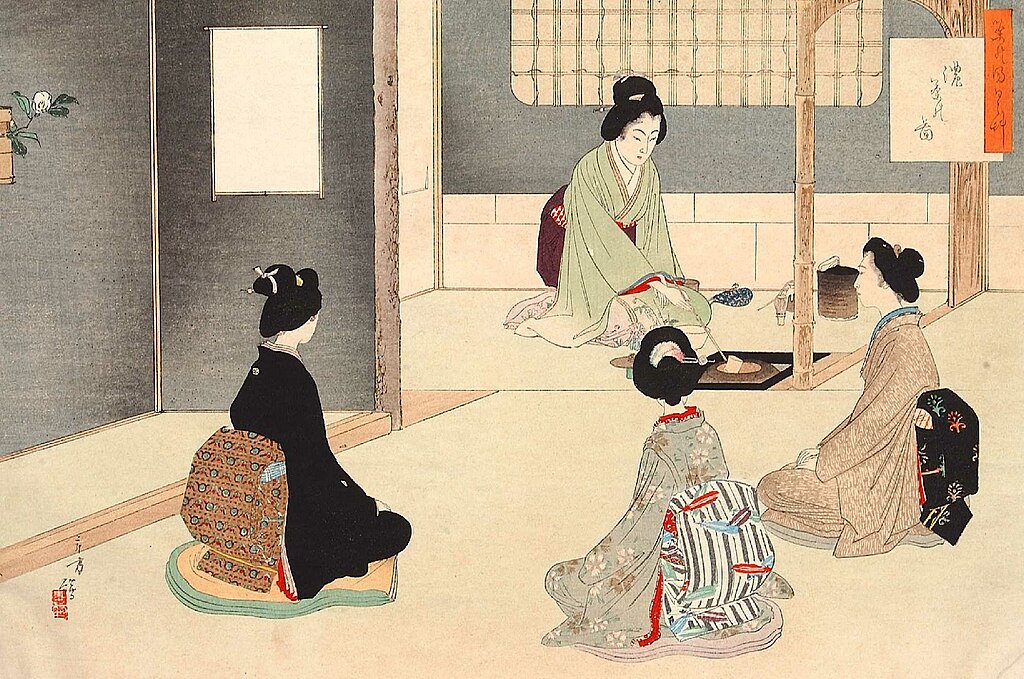
The type of tea used to produce this temptation in a teacup is called “tencha.” The name is indicative of how it is processed. The first syllable, ten, refers to the stone mill that is used to grind the tea into a powder. Matcha is used in the tea ceremony, or chanoyu, but it is also drunk as an everyday beverage. In the latter case, it is best to drink it in the morning, as you will be able to get the most from the effects of its caffeine. It should also be noted that the higher the grade, the greater the caffeine content.
These days there are usually two types of matcha available, one for ceremonial purposes (i.e., the tea ceremony) and the other for culinary purposes.
…culinary-grade matcha is light in body and mild in flavor. Although from good-quality leaf, the flavor will not be as distinct and the color will not be as intense. Overall, culinary-grade matcha is a wonderful product and a good value, but not as singular as ceremonial-grade matcha.1
1Heiss, M., Heiss, R., The Tea Enthusiast’s Handbook: A Guide to the World’s Best Teas (Ten Speed Press, 2010).


