
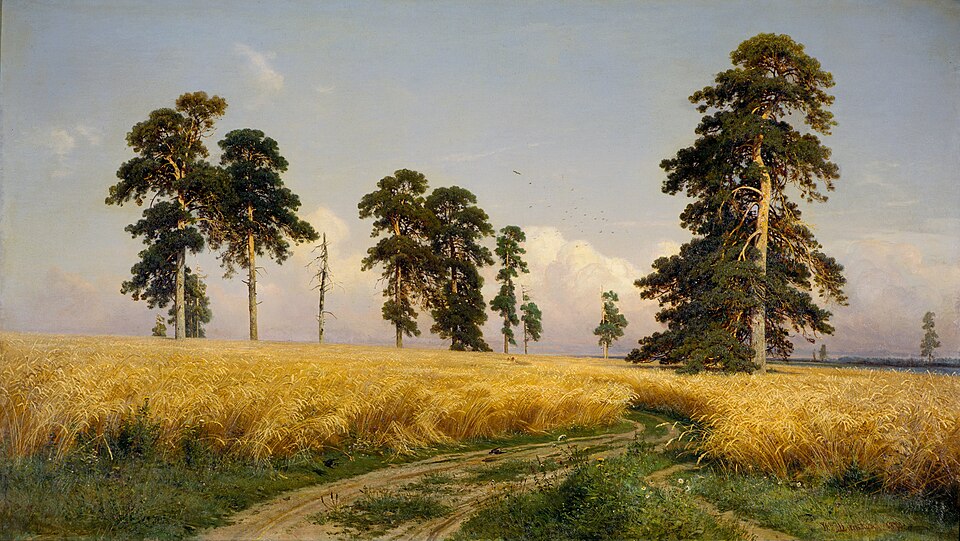
There are times when even the most dedicated bon vivant finds pleasure in the simplest drinks and dishes, when the farmhouse apple brandy gives more satisfaction than what is contained in that pricey bottle in the bottle shop, when a slice of dark bread topped with a generous serving of butter trumps the most elaborate Michelin offering, when a simple two-or-three step cocktail (e.g., gin and tonic with a twist of lime) wins out over that flashy flambé or frappé with or without the pyrotechnics…. At such times, some of us accustomed to dolce vita might turn to kvass for a simple but highly satisfying drink. It’s sincere. There is no pretense. It is what it is.
Though some may dispute this, kvass is liquid bread, with low or no alcohol content. It is an old Russian drink that is consumed in other countries, as well. “Traditionally, it is produced from rye and barley malt, rye flour and stale rye bread.”1 Don’t get me wrong. This is not an exercise in virtue signaling. “Hey, look at me, I’m recycling for the good of the planet.” No, this is a drink that is loaded with a lot of good stuff and is a pleasure to consume. “Kvass contains carbohydrates…proteins and amino acids, lactic and acetic acid, ethanol, minerals and vitamins….”2
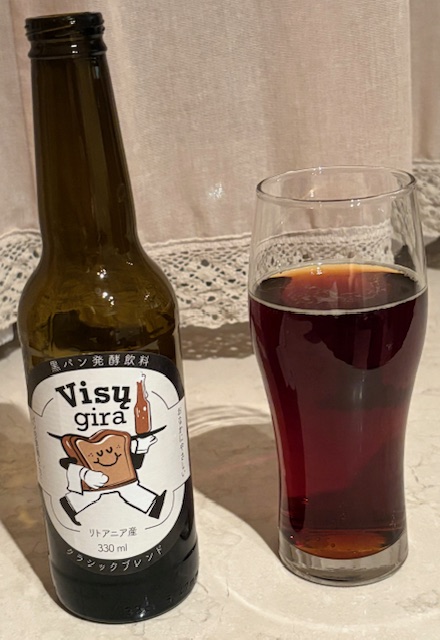
I encountered Visy Inc. and Mr. Ko Sakuma, its CEO, at JFEX Winter 2025. Mr. Sakuma came to kvass by way of Lithuania. He has a nifty little logo, an anthropomorphic slice of rye bread, and a great drink.
Sensory Evaluation: The color of porter. Traces of molasses on the nose. On the palate slightly bready, moderate sweetness, and fizzy. Medium (+) finish.
1Baschali, A., et al. “Traditional Low-Alcoholic and non-Alcoholic Fermented Beverages Consumed in European Countries: A Neglected Food Group,” Nutrition Research Reviews (2017).
2Ibid.
Link: https://visu-gira.com


